
Water is the single greatest threat to your home’s structural integrity — and the damage it causes is almost always preventable. Home foundation water protection is the combination of strategies, systems, and maintenance practices that keep moisture from reaching, penetrating, or undermining the concrete and masonry that holds your house up. Whether you’re dealing with a wet basement, noticing hairline cracks in your foundation walls, or simply want to safeguard your biggest investment before problems begin, understanding how to protect your foundation from water is one of the smartest moves you can make as a homeowner.
The consequences of ignoring water around your foundation are serious: structural settling, mold growth, decreased property value, and repair bills that can climb into the tens of thousands. This guide covers everything you need to know — from identifying warning signs to choosing the right protective systems — so you can act before water acts on your home.
What Does Home Foundation Water Protection Actually Involve?
Home foundation water protection is a multi-layered approach to preventing water from damaging the base of a residential structure. It includes managing surface water around the home, waterproofing foundation walls, controlling subsurface groundwater, and maintaining the systems that keep everything dry.
A complete foundation water protection strategy typically addresses three layers of defense:
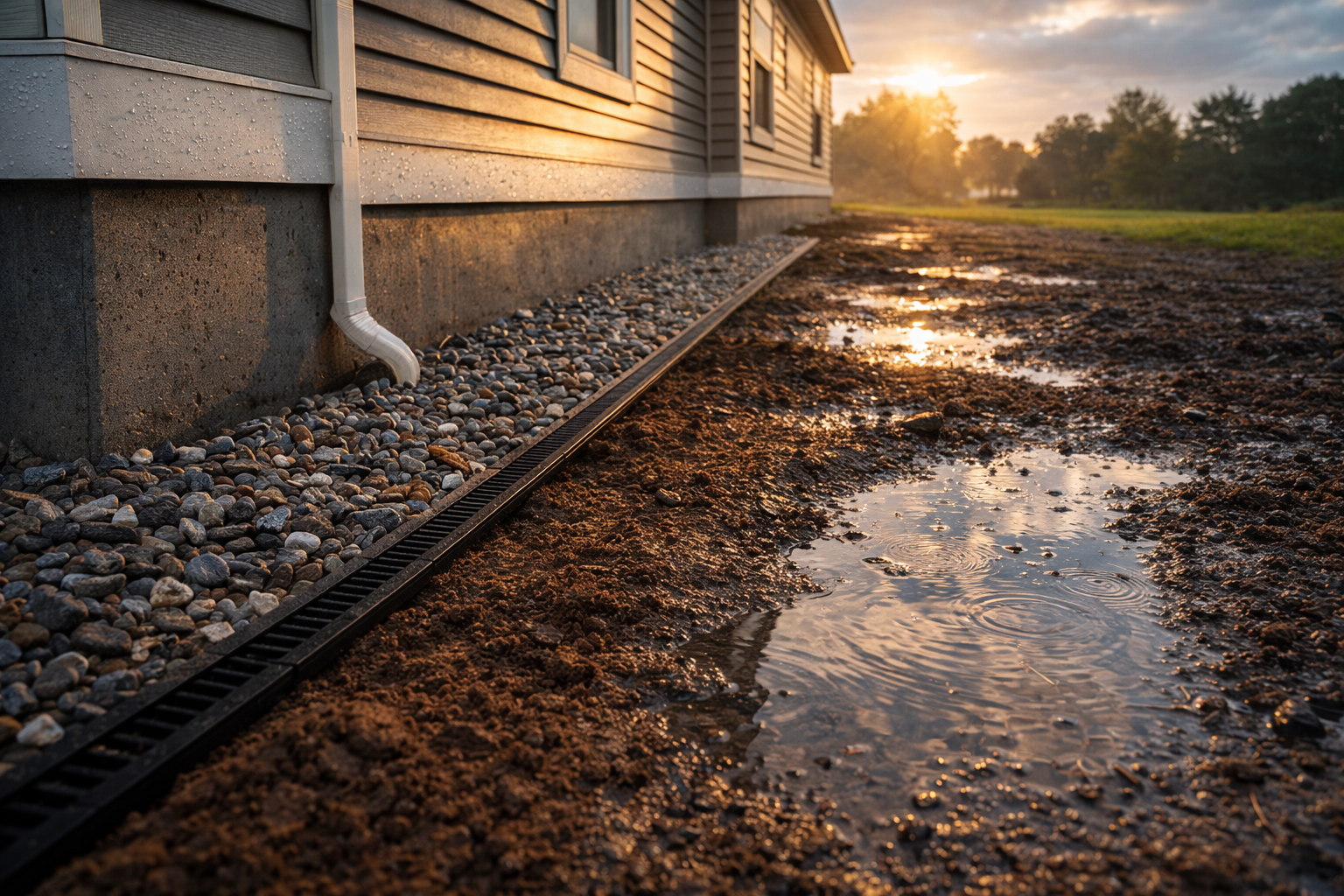
Surface water management — Controlling rain and runoff before it reaches the foundation through grading, gutters, downspout extensions, and landscaping.
Below-grade waterproofing — Applying barriers and coatings to exterior foundation walls to prevent moisture from migrating through concrete.
Subsurface drainage — Installing systems like footing drains, French drains, and sump pumps to intercept and remove groundwater before it creates hydrostatic pressure against foundation walls.
When all three layers work together, your foundation stays dry. When even one fails, water finds a way in.
Why Your Foundation Is Vulnerable to Water Damage
Concrete may feel indestructible, but it’s actually porous. Water wicks through it, seeps into micro-cracks, and exploits every cold joint and construction seam. Over time, this creates a cycle that accelerates damage rather than stabilizing it.
Hydrostatic pressure builds when saturated soil presses against below-grade walls. This pressure can force water through cracks invisible to the naked eye and, in severe cases, cause walls to bow inward.
Freeze-thaw cycles expand small cracks into large ones. Water enters a hairline crack, freezes, expands, and widens the crack. The next thaw lets more water in, and the cycle repeats every winter.
Soil settlement and erosion change how water flows around your home over time. The backfill soil around a new foundation often settles within the first few years, creating a depression that funnels water directly toward the walls.
Rising water tables can push moisture up through basement slabs and footings from below — a problem that no amount of surface management alone can solve.
Understanding these mechanisms is key because the right solution depends entirely on where the water is coming from and how it’s reaching your foundation.
8 Proven Strategies for Protecting Your Foundation From Water
1. Fix Your Grading First
The ground around your home should slope away from the foundation at a minimum pitch of six inches over the first ten feet. This is the most fundamental — and most frequently neglected — element of foundation water protection.
Walk your property’s perimeter after a heavy rain. If you see water pooling against the foundation or flowing toward it rather than away, your grading needs correction. Adding compacted fill dirt and reshaping the grade is often the single most cost-effective improvement you can make, typically costing a few hundred dollars while preventing thousands in damage.
2. Maintain Your Gutter System
Gutters and downspouts are your first line of defense against concentrated roof runoff. A single inch of rain falling on a 1,500-square-foot roof produces roughly 935 gallons of water. Without gutters channeling that volume away, it cascades directly against your foundation walls.
Clean gutters at least twice a year, repair sagging sections promptly, and ensure every downspout discharges at least four to six feet from the foundation. Downspout extensions, splash blocks, or underground discharge pipes are simple upgrades that make a dramatic difference.
3. Install or Upgrade Your Exterior Drainage System
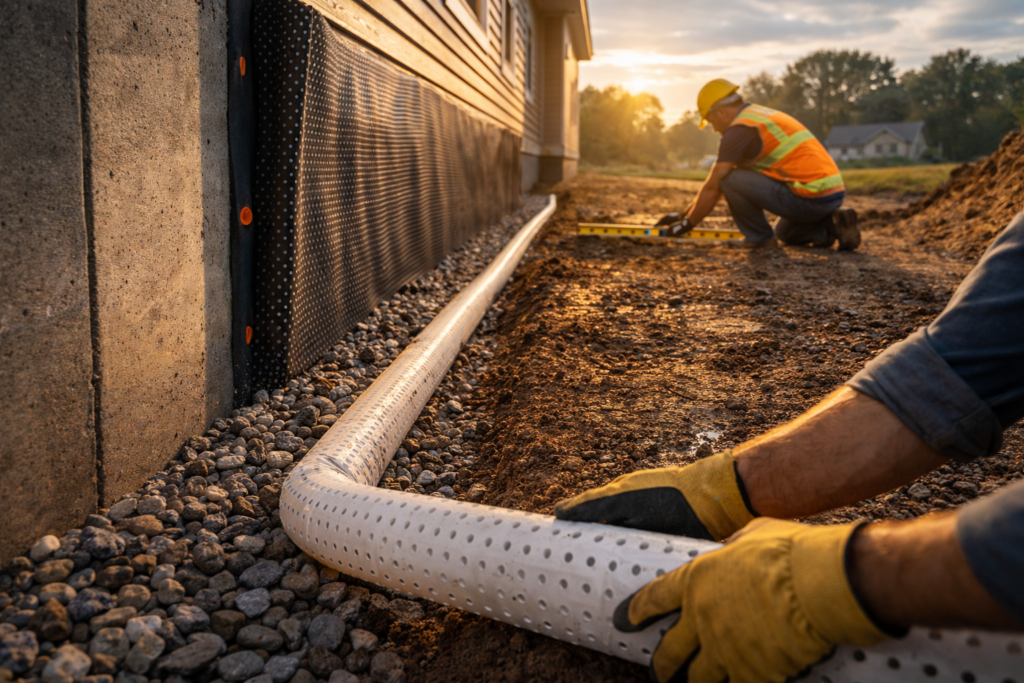
An exterior footing drain — sometimes called a perimeter drain or weeping tile — is a gravel-wrapped perforated pipe installed at the base of your foundation footings. It intercepts groundwater before it can build pressure against your walls and redirects it to a safe discharge point or sump basin.
If your home was built before the 1970s, it may lack a functioning footing drain entirely, or the original clay tile system may have collapsed or clogged. Retrofitting an exterior drainage system is a significant investment (typically $8,000–$20,000 depending on home size and accessibility) but provides the most comprehensive subsurface protection available.
4. Apply Exterior Foundation Waterproofing
Dampproofing and waterproofing are not the same thing. Dampproofing — a thin asphalt coating sprayed on during original construction — only resists moisture vapor. True waterproofing uses elastomeric membranes, rubberized coatings, or peel-and-stick sheet membranes that bridge cracks and resist liquid water under pressure.
If your foundation is being excavated for drainage work, it’s the ideal time to upgrade to a full waterproofing membrane. The marginal cost is modest compared to the excavation expense, and the protection is vastly superior to the original dampproofing.
5. Manage Interior Water With a Sump Pump System
When water makes it past your exterior defenses, a sump pump is your last line of protection. A properly sized and maintained sump pump system collects water from interior footing drains or floor drain channels, pumps it away from the foundation, and discharges it to a safe location.
For reliable protection, invest in a primary pump with a battery backup system. Power outages frequently coincide with heavy storms — exactly when you need your pump most. A backup system ensures continuous operation even when the grid goes down.
6. Seal Interior Foundation Cracks
Visible cracks in basement walls and floors are direct pathways for water. Epoxy injection seals structural cracks from the inside and restores the wall’s load-bearing integrity. Polyurethane injection is better suited for actively leaking cracks, as it expands to fill voids and remains flexible to accommodate minor movement.
Crack repair is not a substitute for addressing the water source, but it’s an essential complement to exterior protection measures. Sealing cracks while ignoring drainage is treating the symptom without curing the disease.
7. Choose Foundation-Friendly Landscaping
What you plant near your home matters more than most people realize. Large trees planted too close to the foundation send roots into footing drains, clog pipes, and draw moisture from the soil unevenly — causing differential settlement. Flower beds built up against foundation walls trap moisture and raise the soil level above the intended grade line.
Keep trees planted at a distance at least equal to their mature canopy spread. Use foundation plantings that have shallow, non-invasive root systems. Ensure mulch beds slope away from the house and don’t create a dam that holds water against the walls.
8. Address Window Wells and Below-Grade Openings
Basement window wells are notorious water entry points. A window well without a proper drain is essentially a bucket collecting water next to your foundation. Install window well covers to deflect rain, ensure each well has a gravel-filled drain connected to your footing drain system, and check that the wells are free of debris that could block drainage.
Similarly, inspect any below-grade stairwells, utility penetrations, or bulkhead doors for signs of water intrusion and address them as part of your overall protection plan.
Warning Signs That Your Foundation Needs Better Water Protection
Catching water problems early saves money and prevents structural damage. Watch for these indicators that your current protection is inadequate:
Visible water or dampness on basement walls or floors after rain — the most obvious sign that water is finding a path inside.
White, chalky deposits on concrete (efflorescence) — mineral salts left behind when water evaporates from the wall surface, indicating moisture is migrating through the concrete.
Musty odors in lower levels — often caused by mold and mildew growing in damp conditions you may not be able to see behind walls or under flooring.
Cracks that are growing — mark the ends of any foundation crack with a pencil and date. If the crack extends beyond your marks over weeks or months, water and soil pressure may be actively worsening the damage.
Sticking doors or uneven floors — signs of foundation movement that may be caused by soil erosion or swelling due to moisture changes.
Peeling paint or rust stains on walls — moisture pushing through from the exterior can cause interior finishes to deteriorate and embedded metal to corrode.
If you’re noticing any combination of these signs, a professional foundation inspection should be your immediate next step.
How Much Does Foundation Water Protection Cost?
Costs depend heavily on the scope of work and the severity of the problem. Here’s a general overview of what homeowners can expect:
Gutter cleaning and downspout extensions typically run $200–$600. Grading correction around the foundation falls in the $500–$3,000 range. Interior crack injection costs $300–$800 per crack. A sump pump installation with battery backup usually comes in between $1,500 and $4,000. Interior perimeter drainage systems range from $3,000 to $10,000. Exterior waterproofing with footing drains is the most comprehensive option, typically costing $8,000–$25,000 depending on home size and site conditions.
The key perspective here: the average cost to repair serious foundation structural damage ranges from $10,000 to over $50,000. Protection is almost always less expensive than remediation.
Frequently Asked Questions
What is the best way to protect a home foundation from water?
The best approach is a layered system: proper grading to direct surface water away, a functioning gutter system with extended downspouts, exterior waterproofing membranes on foundation walls, a perimeter footing drain to manage groundwater, and an interior sump pump as a final safeguard. No single solution addresses every water pathway, so combining methods provides the most reliable protection.
How do I know if water is damaging my foundation?
Common signs include damp or wet basement walls after rain, white mineral deposits (efflorescence) on concrete, persistent musty smells, growing cracks in walls or floors, doors that stick, and uneven flooring. If you notice several of these symptoms together, schedule a professional foundation inspection promptly.
Can I waterproof my foundation myself?
Minor improvements like extending downspouts, correcting surface grading, installing window well covers, and applying interior sealant coatings are reasonable DIY projects. However, exterior waterproofing, footing drain installation, and structural crack repair require professional equipment, materials, and expertise. Improper installation can void warranties and worsen existing problems.
How often should I inspect my foundation for water issues?
Inspect your foundation perimeter and basement at least twice a year — once in spring after snowmelt and once in late fall before winter. Additionally, check after any unusually heavy rainfall event. Early detection of small issues prevents them from becoming major repairs.
Does homeowners insurance cover foundation water damage?
Standard homeowners insurance policies typically do not cover water damage caused by groundwater, poor drainage, or gradual seepage. Flood insurance covers some scenarios but has significant limitations. Most foundation water damage is considered a maintenance issue, making prevention your most reliable financial protection.
Is interior or exterior waterproofing better?
Exterior waterproofing is generally more effective because it stops water before it contacts the foundation wall. Interior systems manage water that has already entered, which still subjects the concrete to moisture exposure. When possible, exterior waterproofing combined with an interior sump pump provides the highest level of protection.
Don’t Wait for Water to Make the First Move
Foundation water damage doesn’t announce itself with a dramatic flood. It starts quietly — a small damp spot, a faint smell, a crack you barely notice. By the time the signs are obvious, the damage is often well advanced and significantly more expensive to repair.
The most effective time to invest in home foundation water protection is before you have a serious problem. If you’re already seeing warning signs, the second-best time is right now.
Schedule a professional foundation and drainage assessment today. An experienced waterproofing contractor can identify your specific vulnerabilities, recommend the right combination of protective measures, and help you prioritize improvements based on urgency and budget. Most offer free inspections and detailed written estimates.
Your foundation holds up everything above it. Make sure water isn’t quietly pulling it apart from below.